
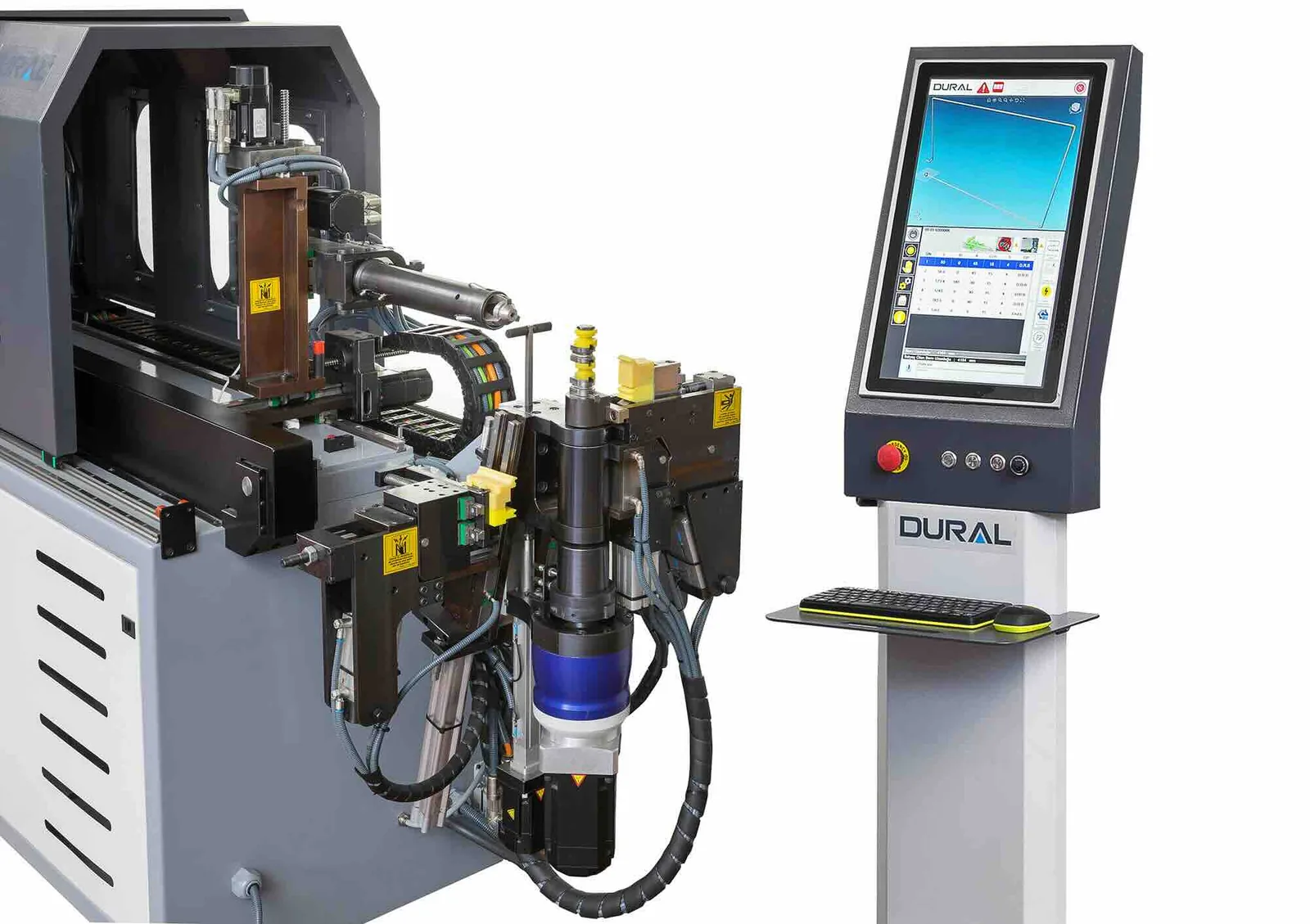
Copper is one of the most demanding materials to bend, and also one of the most common — refrigeration and air-conditioning circuits, plumbing, heat exchangers and electrical busbar all rely on cleanly bent copper tube. This guide explains what makes a good copper pipe bender — sometimes called a copper tube bender or copper pipe bending machine — and how to get tight, wrinkle-free bends in soft copper.
Why Copper Is Hard to Bend
Copper is soft and ductile, which sounds like it should be easy — but that softness is exactly the problem. Bend copper tube without proper internal support and the thin wall collapses or wrinkles on the inside of the bend, restricting flow and ruining the part. Because copper work is usually thin-wall and often tight-radius (refrigerant lines especially), the tooling has to hold the wall precisely through the bend.
Mandrel Support Is Not Optional
The single most important feature in a copper pipe bender is mandrel support. A mandrel is a tool inserted inside the tube that holds the wall from collapsing as it bends, working together with a wiper die to prevent wrinkles. Every Dural Bend machine supports mandrel, wiper die and pressure die tooling as standard — which is what lets them bend thin-wall copper cleanly where a cheaper machine leaves a flattened, restricted bend.
Which Machine for Copper?
For the small-diameter, thin-wall copper that dominates HVAC and refrigeration — refrigerant lines, coils, compact circuits up to Ø60 mm — the EOS full electric CNC tube bender is the ideal choice. Every axis runs on servo motors with zero hydraulics, giving exceptionally clean, precise, tight-radius bends and quiet, energy-efficient operation on a coil line running continuously. For larger copper and mixed pipework up to Ø170 mm, the Griffin hybrid CNC takes over, and for repetitive coil production the Atlas BRF automatic runs the whole bend sequence hands-free.
Finishing Copper Tube Ends
Copper joints are usually brazed or soldered, and a clean tube end makes a better joint. After cutting, the Yalın deburring machines clean the inside and outside edge, and where a connection needs a formed end — a flare or a reduction — the Vulcan end forming machine shapes it, with careful die design because copper tears easily if the geometry is wrong.
Copper Bending in Industry
Most copper tube bending happens in HVAC and refrigeration and white goods manufacturing — cooling circuits, condenser and evaporator coils, refrigerant lines. Whatever your copper application, send us your part drawing or a sample tube and we will recommend the configuration. Email info@duralbend.com or call +90 212 482 41 07.